

For grade 3 teachers using Investigating History
Investigating History teaches Massachusetts.
MapScouts brings it to your town.
A field trip through your own town, without leaving the classroom. Short, play-based social studies chapters that pair with the five units of grade 3 Investigating History.
- About 15 minutes a chapter
- Read aloud
- No student accounts


Where it fits
Investigating History asks your class to study your own town or city, and that part of the course needs your own local research. MapScouts brings it to students on the real map. Scout, our guide, leads each student to the places where the history happened, and every story is short, true and sourced.
-
Unit 1
Indigenous Peoples of the Northeast
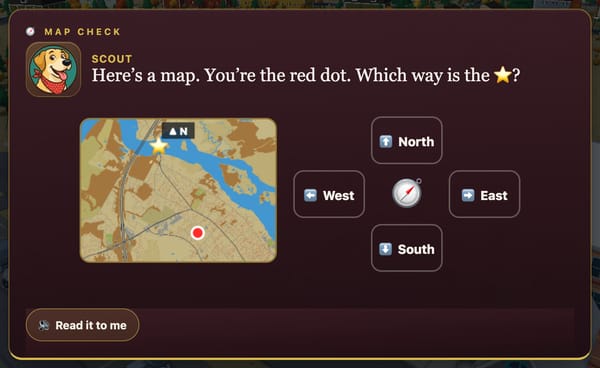
- Find Your Way Your town Students find real places with compass directions on the map of their own town.
- The First People Your town The Native people who lived where your school stands, and the place names they gave.
-
Unit 2
Indigenous Communities, European Colonizers, and the Plymouth Colony
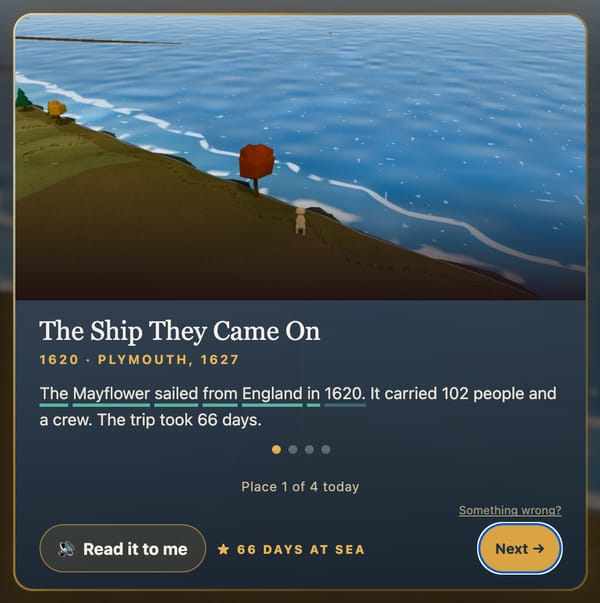
- The Pilgrims and the Wampanoag Any class Plymouth as it was in 1627. The voyage and the Mayflower Compact, the first winter, daily life, Patuxet and Massasoit’s treaty, and the 1621 harvest, with its myths set straight.
-
Unit 3
Change in the Time of the Massachusetts Bay Colony
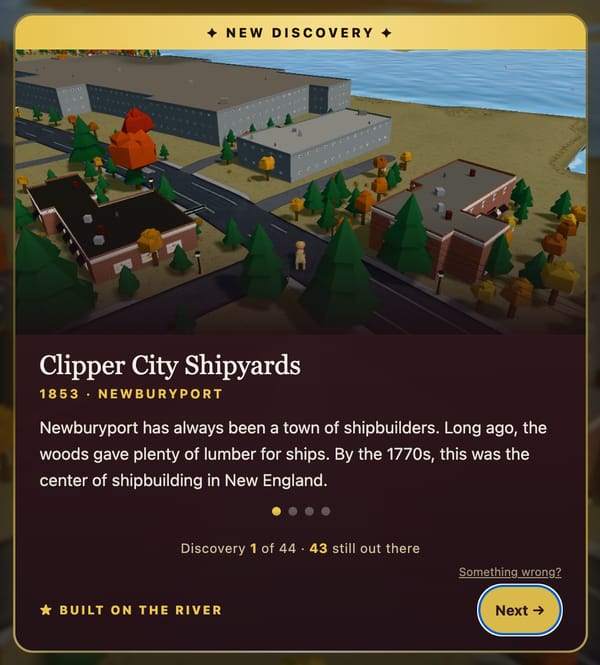
- Your town’s colonial and seaport chapters Your town How the town began, fishing, shipbuilding and trade, and the enslaved people who lived there and fought for their freedom. Newburyport and Gloucester, two of the seaport cities the standards name, are ready now.
-
Unit 4
Massachusetts and the Revolution
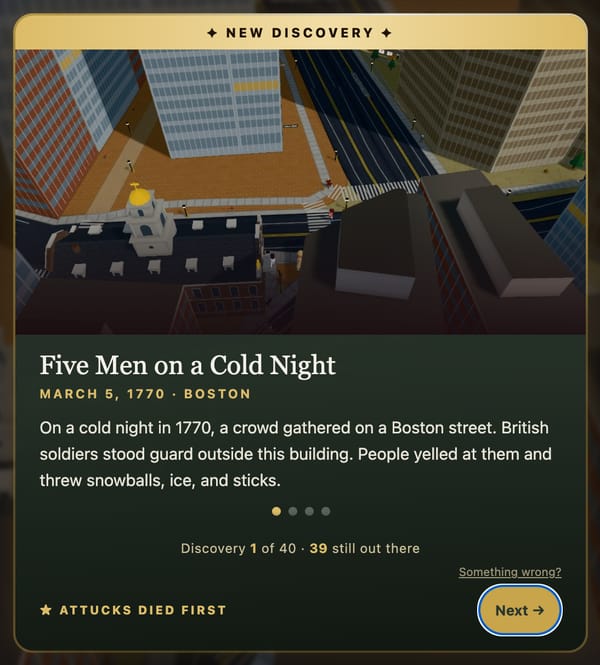
- Boston and the Revolution Any class The Boston Massacre and Crispus Attucks, the Tea Party, the lanterns at Old North, the Declaration read aloud in Boston, and the 1780 state constitution.
-
Unit 5
The People and Governments of Massachusetts
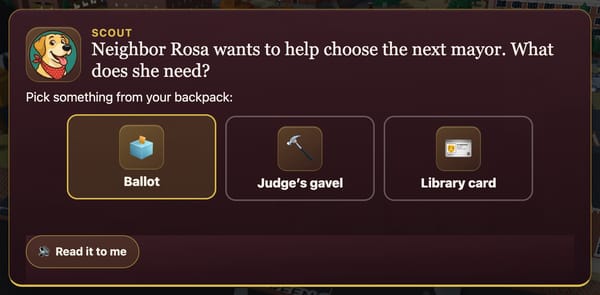
- How the Town Works Your town From town meeting to mayor and city council, the courts, the library, and how a town keeps people safe.
- Your town’s history chapters Your town They answer the questions Unit 5 asks: who lived here first, when the town began, who was enslaved here, who came later, and who lives here now.
-
Any class units play in every classroom.
Your town units are built town by town: search for yours to see what’s ready, or request it, and we’ll keep you posted as it’s built.
Find or request your town


A chapter in a 30-minute block
-
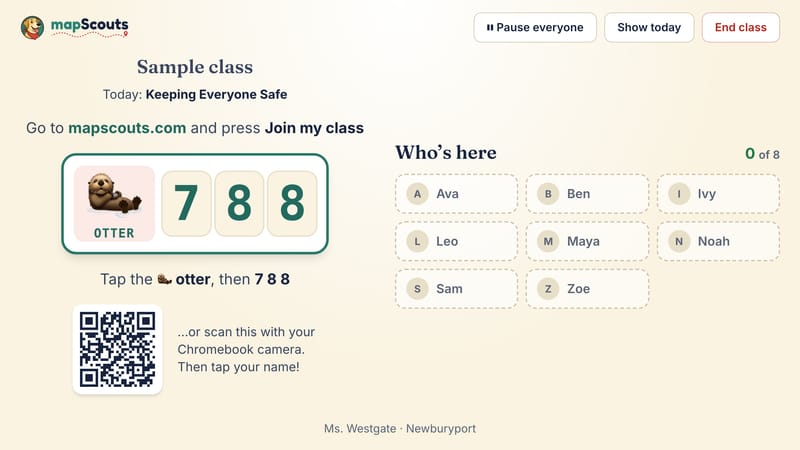
Two minutes to join. Put the class code on the board. Students press Join my class, tap the code, then tap their name. No accounts.
-
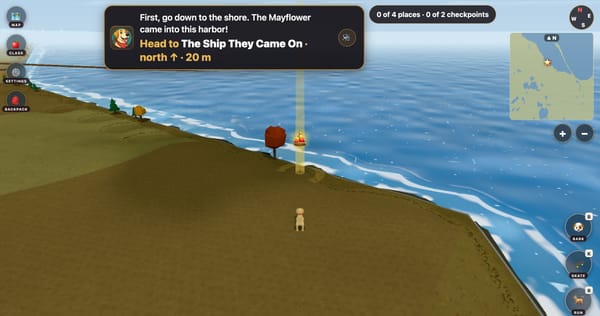
About 15 minutes to explore. Each student plays one chapter. Scout leads them place to place, reads every story aloud, and checks what they learned with a map check or a townsperson who needs help. You watch the whole class live.
-
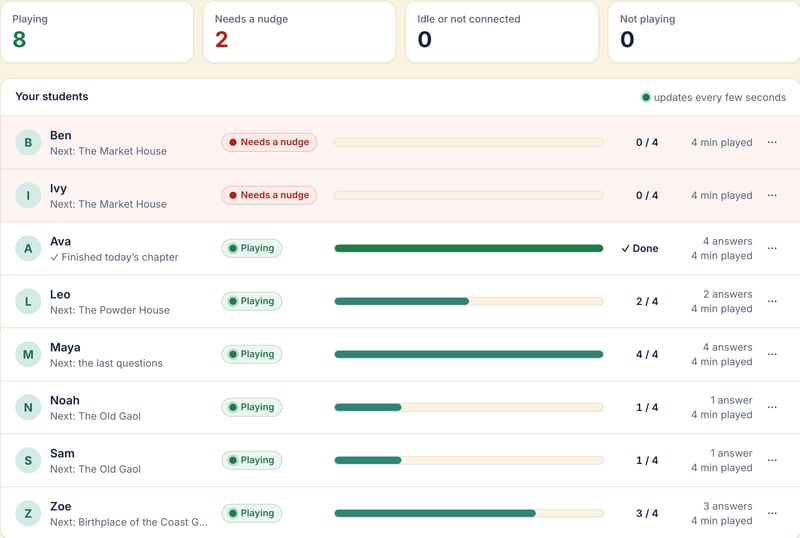
The rest to talk. Pick up your Investigating History question for the day. After class, your report shows what each student learned.
Most chapters take 12 to 20 minutes. It runs in the browser on school Chromebooks. A five-minute quiz before and after each unit shows what they learned.
Free for teachers
Teachers never pay.
- 1Your first unit is free, with one class, for a whole semester.
- +1Send your school a funding request (we write it for you, in your name) and you get a second unit free.
- +1When your own town is ready, its first unit is free too.
Schools can license the full library for every teacher in the building.
Built for students’ privacy
- No student accounts.
- No ads.
- Nothing sold or shared.
We keep each student’s first name and progress, and nothing else.
Hard history, like slavery in Massachusetts and what colonization cost the Wampanoag, is told plainly, the way schools already teach it, with a source for every story.
See it for yourself.
See it at mapscouts.com/investigating-history · Watch the demo at mapscouts.com/demo · hello@mapscouts.com
MapScouts is an independent resource designed to complement Investigating History. It is not affiliated with or endorsed by the Massachusetts Department of Elementary and Secondary Education (DESE). Investigating History is DESE’s history and social science curriculum for grades 3 to 7.